

It is important to be able to recognise when dogs may be feeling stressed or anxious, so we can protect their welfare by modifying interactions to help them feel more comfortable. Stress and anxiety can also be precursors to aggression, so it is important to recognise possible warning signs to prevent escalation to dangerous behaviour. Dogs may have a predisposition to developing fear and anxiety, which can be influenced by genetics, environmental factors, and learning experiences. Signs of stress and anxiety may also indicate underlying pathology, especially if there are any sudden changes in behaviour. When a patient’s history is taken, it can therefore be helpful to create a timeline of clinical signs and behavioural symptoms.
Some signs of stress and anxiety are well-known and easily recognised, whereas others may be less familiar and require close attention to notice. We will cover both in this article. These behaviours may be exhibited in specific contexts or observed more generally throughout a dog’s life.
The following table lists some of the most easily recognised signs of stress and anxiety in dogs.
| Physiological | Panting, muscle tension, shedding, hypersalivation, trembling, urination/defecation, dilated pupils, red sclera, sweaty paws, and in more extreme examples, vomiting and reluctance to eat. |
|---|---|
| Behavioural | Pacing, hyperactivity, hypervigilance, aggression, withdrawal, reduced sociability, vocalisations, destructive behaviours, displacement behaviours, repetitive behaviours, attachment seeking behaviours, reduced curiosity. |
Subtle signs of stress and anxiety
Alongside the more easily recognised signs of stress and anxiety, there are a number of other behaviours which often go unnoticed due to the subtly or speed in which they occur. Some behaviours may also be overlooked or misinterpreted due to the nature of the behaviour (e.g. stress yawning may be misinterpreted as fatigue). This may lead to compromises in the dog’s welfare, and an escalation in the dog’s anxiety if they do not receive the social outcome they expect. Learning to recognise these subtle signs is therefore important.
More subtle signs of stress or anxiety can include:
- Yawning
- Lip licking
- Lowering the head
- Flattening the ears
- Showing whites of the eyes (also known as ‘whale eye’)
- Dilated pupils
- Lifting a paw
- Rolling over
- Tension in the head, face, neck
Figure 1: Examples of behaviours associated with stress or anxiety in dogs, compared to images of relaxed dogs.
Other stress-related behaviours and coping strategies
As well as the physiological changes and behaviours described above, there are other, more complex, behaviours which may be seen in stressed or anxious dogs.
Emotional conflict is the term used to describe an animal who has conflicting emotions about the situation/encounter they are in and is uncertain about what to do. A dog who is experiencing emotional conflict may exhibit more extreme/undesirable responses, and it may be more difficult to interpret their behaviour. In the clinical setting, this may be observed in a dog who is fearful and frustrated, pulling and leaping around on their lead and then backing away barking. It may also be observed when a dog is displaying more subtle approach-avoidance behaviour, where they may step forwards and then step back. Dogs can also be placed into a situation of emotional conflict due to the use of primary reinforcers such as food.
Displacement behaviours may be shown during times of stress, emotional conflict, or as the result of frustration (e.g. if the dog is denied access to something it wants). Displacement behaviours are described as ‘normal behaviours seen out of context’ and may include sniffing, scratching (themselves), shake offs, stretching and humping. Within the clinical environment, it can be helpful to recognise that a change in a dog’s behaviour to another, seemingly out of context, may indicate the dog is struggling to know what to do. This may be observed when a veterinarian approaches to greet a dog and the dog starts to stretch or scratch themselves, or during a clinical examination, when a dog ‘shakes off’ when it isn’t wet.
Coping strategies: dogs may seek to hold or carry items (e.g. toys, shoes, sticks) to help them to regulate their emotional arousal during times of stress and anxiety. Dogs may also choose to use items to reduce tension during an encounter and to indicate that their intensions are positive (e.g. approaching someone to offer a toy). If they are unable to access items, or items are removed, this may take away an important coping strategy. It may therefore be helpful to consider whether certain dogs may benefit from having a toy (or holding their lead) in the clinical environment (checking first there are no resource guarding issues).
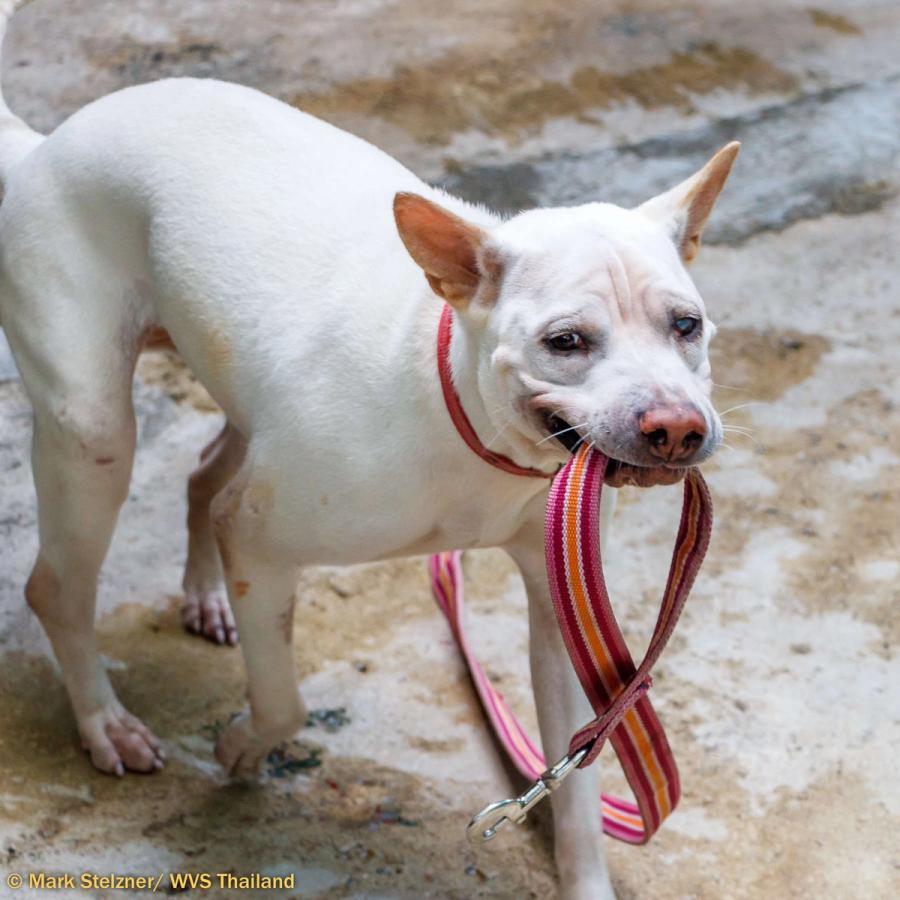
Dogs may prefer to move around when they are stressed, or they may prefer to withdraw/hide. If it is possible to establish the dogs preferred coping strategy, this may help to lower their anxiety and avoid escalations in their response. For instance, if a dog needs to keep moving, try to provide a longer leash and allow the dog to walk around the handler/room until a different stance is required. If the dog is trying to hide, try to provide a quieter corner/area and give the dog some time to settle before asking anything of them.