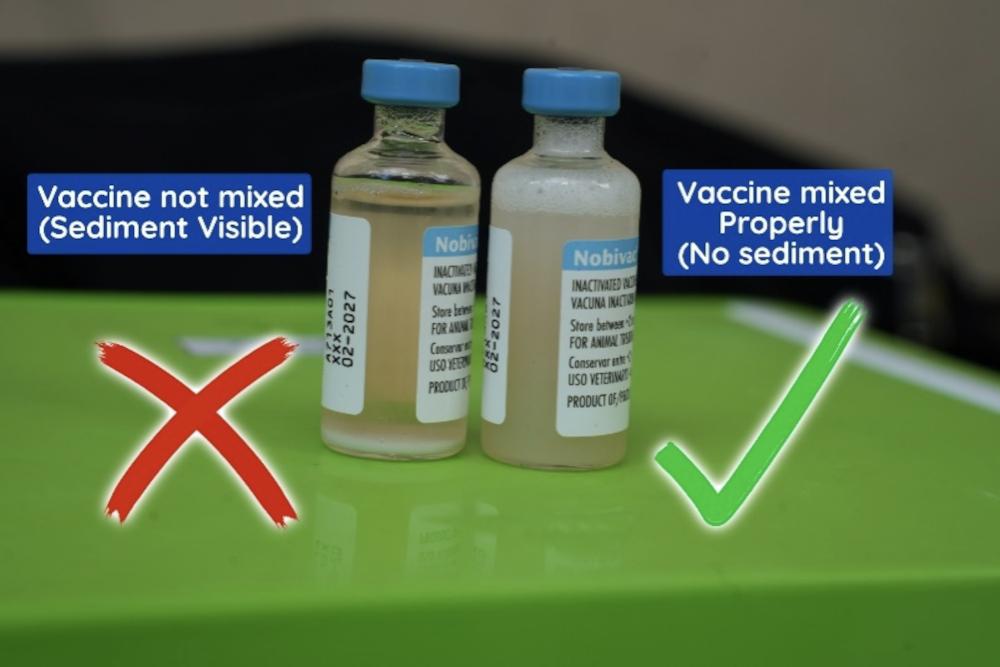

Parenteral vaccines are made of inactivated (‘killed’) rabies virus. Extremes in temperature, both too hot or too cold, can affect how effective the vaccine is at inducing an immune response. The ideal range for vaccine storage is 4 - 8 degrees ; the normal range of a refrigerator. If the vaccine freezes, it becomes totally useless and must be thrown away, even if it has defrosted. Periods of high temperatures will accelerate degradation of the vaccine and reduce efficacy over time.
⚠️ It is better that the vaccine becomes a little too warm than allowing it to freeze.
As the majority of campaign cost is in getting the vaccine into the dog, all that work is wasted if the vaccine does not work. Specific vaccines will vary in their thermostability depending on their composition and how they are manufactured.
Vaccines at the hub
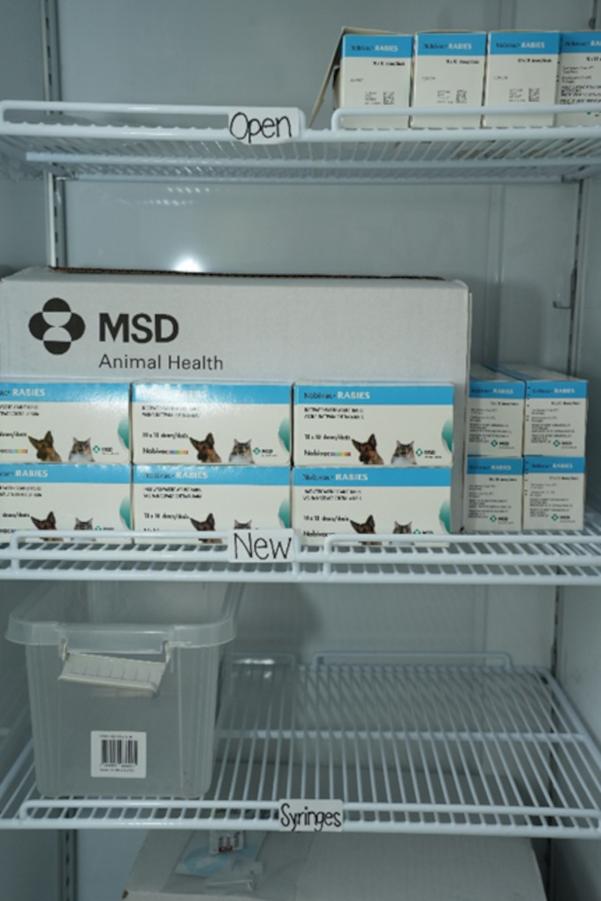
When vaccines are stored in the fridge, they should always be kept tidy and organised for ease of use (figure 1) This helps to prevent too many open vials which may not be used within the 48 recommended period before they must be discarded. It also helps to quickly assess stock quantity.
Multi-dose vials are generally used in mass dog vaccination campaigns. Once the seal has been broken, the vial should be kept refrigerated and used within 48 hours. Vaccine can be drawn into numerous syringes during a vaccination session so that they are ready to administer as soon as a dog is available. Vaccines drawn into a syringe, but not administered at the end of the day should be discarded and not stored or put back into the vial.
Watch this video about how to prepare the cooler box for the day:
The Shake Test
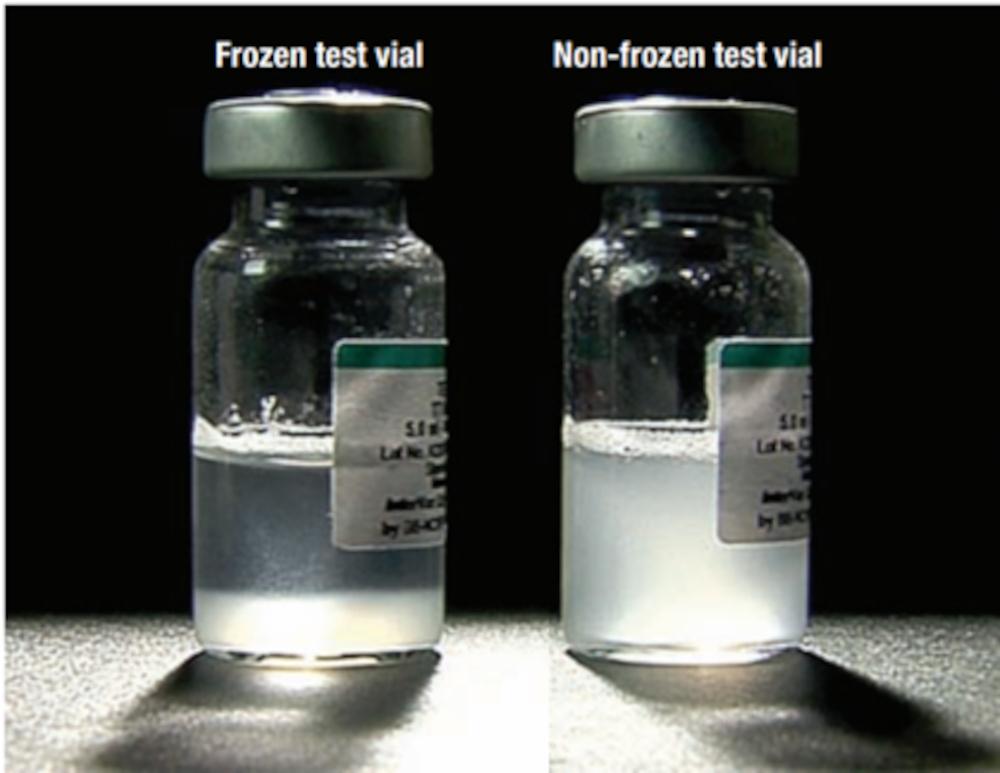
Freezing damages vaccines irreparably and is hard to detect once defrosted. The WHO has validated the ‘Shake Test’ to detect if a vaccine vial or bottle has been frozen and since defrosted. After freezing, the vaccine will form flakes of precipitate that quickly settle as sediment at the bottom of the vial (figure 2). This can be mistaken for normal settling of the solute in a undamaged vaccine. The key is this precipitate will settle much quicker than in an undamaged bottle after shaking - after shaking, the solute in an undamaged vial will remain resuspended for some time, remaining as a uniformly cloudy liquid (figure 2: Right); precipitate from freezing will separate and settle quickly (see figure 2: Left).
💡 The Shake Test involves vigorous shaking (by hand) of vaccines bottles for 10-15 seconds and subsequent observation up to 30 minutes.
📚 Kartoglu, Ü., Özgüler, N. K., Wolfson, L. J., & Kurzatkowski, W. (2010). Validation of the shake test for detecting freeze damage to adsorbed vaccines. Bulletin of the World Health Organization, 88(8), 624–631. https://doi.org/10.2471/BLT.08.056879
Handling vaccines in the field
Watch this video for do’s and don'ts of handling cooler boxes in the field:
Freezing
Once a vaccine has frozen it is rendered totally useless, even after it has defrosted, and must be discarded. Vials can be tested to see if they have previously frozen using the ‘shake test’ (see below). One of the most common causes of freezing is if the vaccine is placed directly on icepacks during transport.
High temperatures
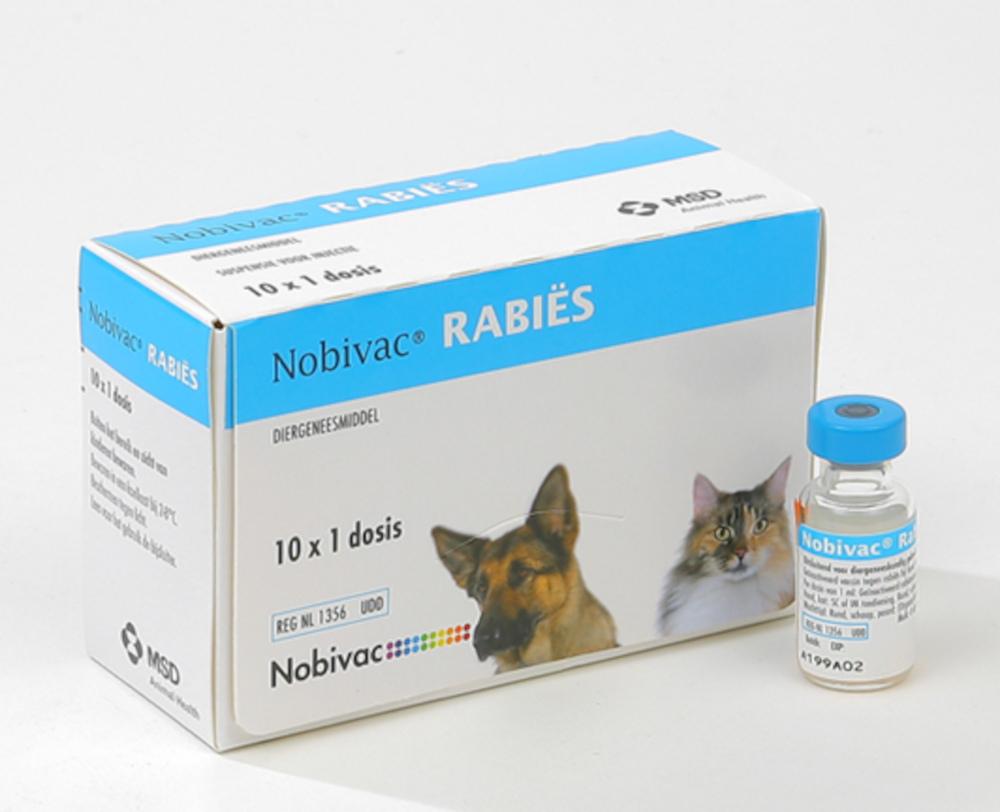
High quality cell culture vaccines gave been shown to fremain effective, even following periods of high temperature. For example, a study showed that Nobivac® Rabies remained effective following storage at 25°C for six months or 30°C for three months. Nevertheless, even when using such vaccines, efforts should be taken to keep the vaccine within the optimal range.
Sunlight
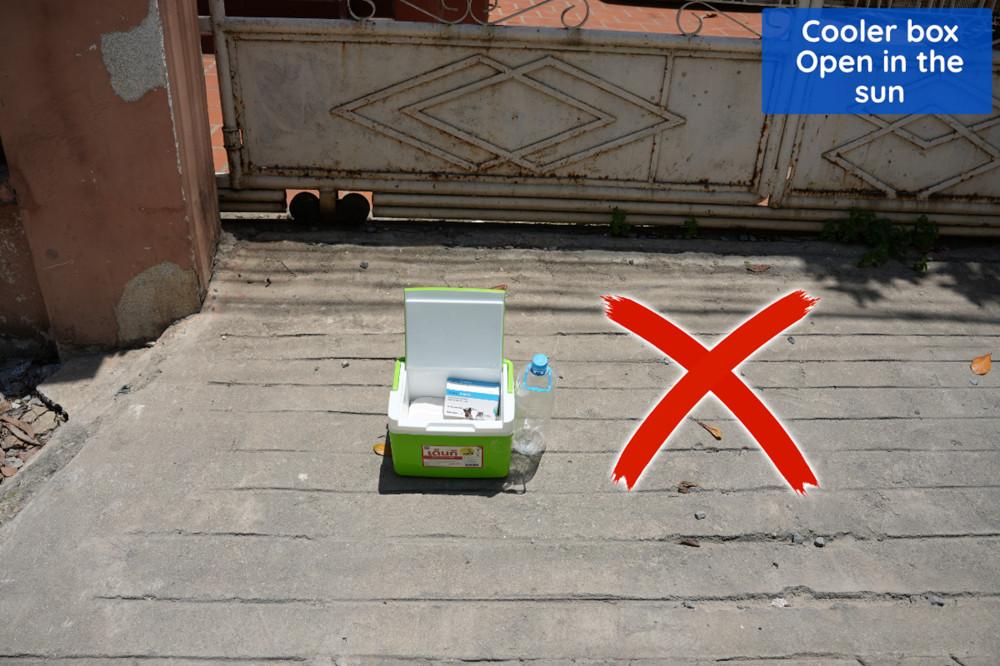
Exposure to sunlight also accelerates degradation of the vaccine, making it become less effective over time. Therefore no not leave the cooler box in direct sunlight and try to avoid exposing the vaccine to prolonged periods of direct sunlight when handling the vaccine in vials or in syringes.
Sediment
The vaccine precipitate can settle at the bottom of the vial or syringe over time. Shake the vial / syringe well before drawing up the vaccine into a syringe or injecting into a dog. It is important to distinguish this from the precipitate caused by previous freezing of the vaccine - see the Shake Test.