

There is a high risk of exposure to rabies virus when taking samples for rabies diagnosis due to the likely high viral load in tissues of the central nervous system handled during the procedure. Personal Protective Equipment (PPE) must be worn by all individuals present during the necropsy.
The purpose oof PPE is twofold:
- to prevent exposure to infectious materials.
- to ensure the safe disposal of all contaminated materials.
The method of putting on and removing PPE is important in preventing contamination of skin and non-contaminated clothing with infectious materials.
Preventing exposure
Infectious materials
Materials considered infectious:
- Brain stem - Rabies virus will be at the highest concentration in the brain stem and brain tissues
- Saliva - Saliva and all surfaces that may have been contacted by saliva (mouth / claws etc) should be considered infectious
- Other tissues - During the clinical stages of rabies, the rabies virus disseminates to all organs of the body and so all tissues handled during a necropsy should be considered potentially infectious
Routes of exposure
PPE aims to cover all routes of the body through which the virus can be transmitted. This includes:
- Eyes / nose / mouth - Whilst technique should aim to minimise the risk of flicking or splashing, it is possible for infectious materials to get flicked, splashed or sprayed, presenting greatest risk of contamination of the eyes or mucous membranes of the nose or mouth. PPE should aim to protect the face from such situations.
- Skin abrasions - Existing defects in the skin pose a risk for rabies infection if contaminated by infectious materials. The aim of PPE is to cover all areas of exposed skin to avoid potential contamination of skin defects that the operator may not even be aware of.
- Cuts - Sharp dissection is necessary to access tissues for rabies diagnostic testing. Knives and scalpels used during the procedure therefore pose a high risk of rabies virus transmission and should be handled with great care. All sharp instruments should be disposed of in a rigid container which is clearly labelled as biohazardous.
Equipment check-list
PPE must be put on and fitted before handling the animal. A PPE checklist should be displayed in the changing area so that staff are prompted to check each item before they enter the necropsy area. If any piece of PPE needs to be adjusted once the necropsy has begin, this should be done by the non-contaminated assistant, or PPE should be safely removed and re-applied from the start to avoid contamination.
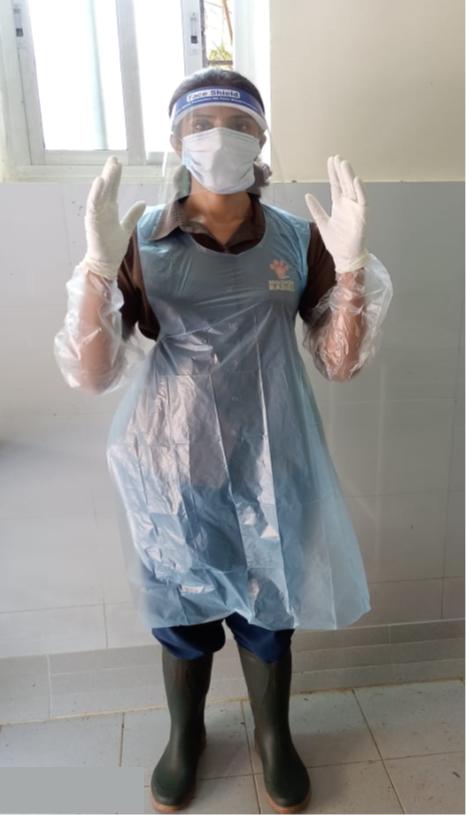
Mask
- Protects the nose / mouth
- Fit tight over the nose to prevent moisture from being directed up onto your eye protection
- Do not adjust once hands are contaminated - ask a non-contaminated assistant if required.
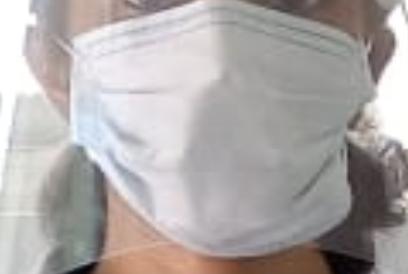
Face shied / safety goggles
- Protects the eyes
- Spectacles do not provide adequate protection - safety goggles or full face shield must be worn over
- Fogging can obscure vision during procedure and increase the risk of accidents
- To avoid fogging, create a tight mask seal over the nose or use sealed anti-fog goggles
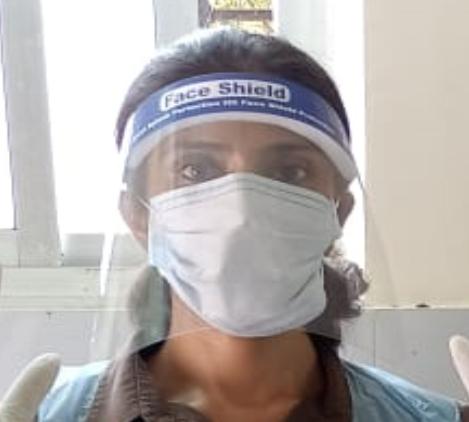
Gown
- Prevents infectious materials contaminating clothes
- Ensures that any splashed infectious material is removed and safely disposed after the PM
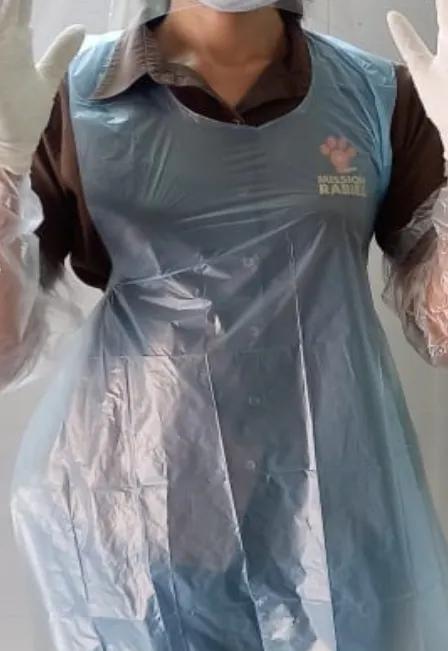
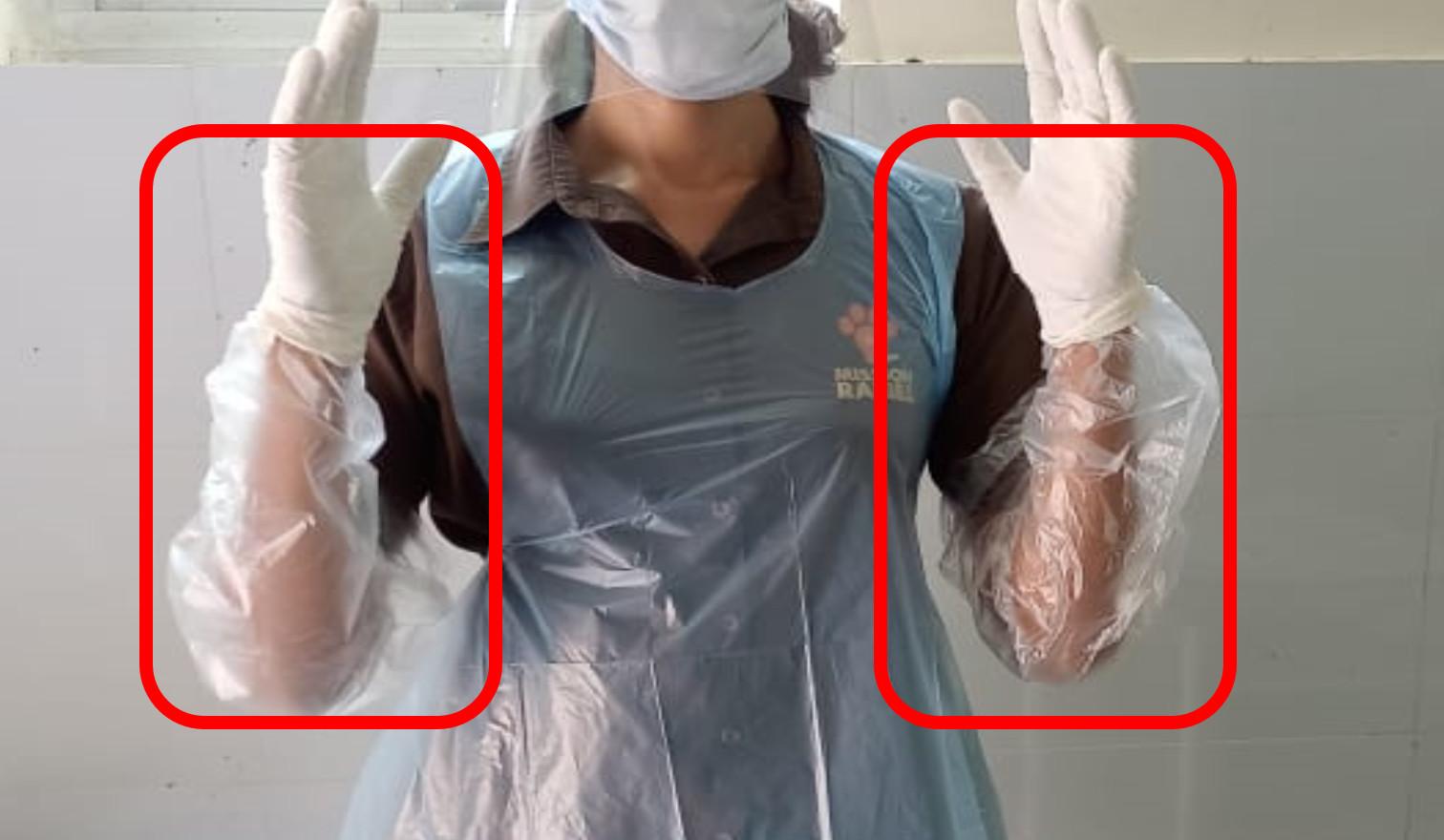
Arm-length gloves
- Protect the forearms, which can have abrasions / breaks in the skin you are not aware of and are a risk for rabies transmission
- Gloves also ensure that any splashed infectious material is removed and safely disposed after the PM
- These should be put on first, before hand gloves
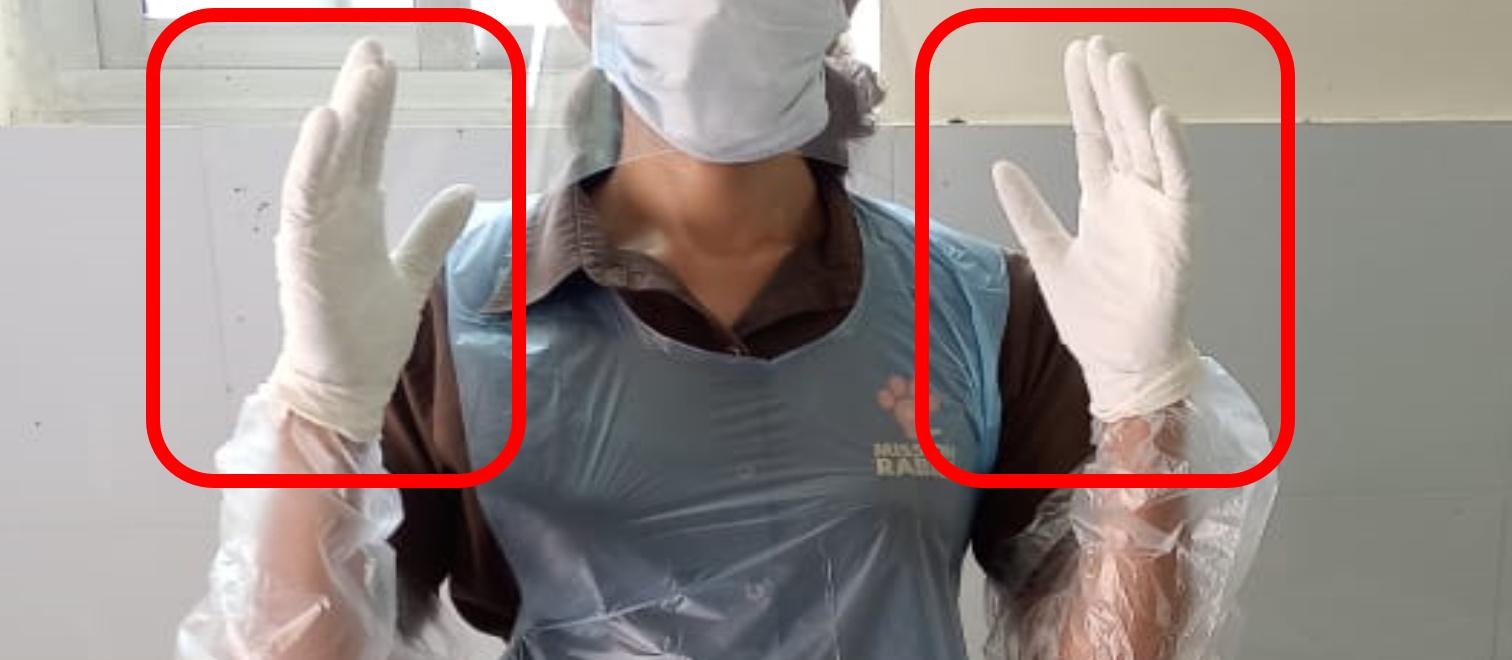
Hand gloves
- Latex gloves protect the hands, which will be the most contaminated body part during the necropsy
- Provide good grip and dexterity
- Be careful of any glove tears/cuts and immediately replace gloves if concerned
- Put on hand gloves last
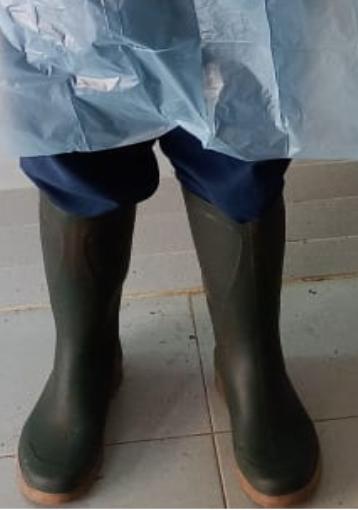
Boots
- Protect the feet in case a scalpel or sharp item contaminated with infectious material is dropped during the PM
- Easy to disinfect
- They ensure that infectious material on boots is not transferred outside the PM room
PPE removal
After the PM and testing is complete, PPE should be removed in this order:
- First remove the outer layer of gloves – these are most contaminated.
- Then remove the arm-length gloves, taking care not to touch the contaminated side with your ungloved hands.
- Next remove the apron from the ties behind, folding the contaminated part inwards and taking care not to touch the contaminated surface.
- Finally remove your mask and eye protection, taking care not to touch your face.
Disinfection / disposal
All PPE should be either disposed of or disinfected after each necropsy.
- Disinfection of reusable equipment should be conducted using viricidal disinfectants according to the manufacturers instructions of concentration and contact times.
- Disposable equipment should be placed in bags clearly marked as biohazardous and stored in a secure location to avoid inadvertent exposure through animals scavenging. Provision should be made for the routine safe destruction of biohazardous waste, or incinerated on-site where this is not possible.