
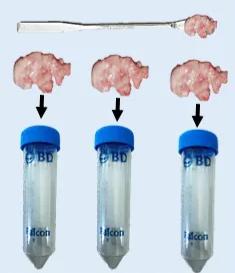
After Lateral Flow Assay testing, divide the remaining sample into three aliquots; one for primary diagnostic testing, one for reference laboratory testing and one for storage in an archive. Each sample should aim to have a full cross section of brain stem, and is placed into screw-top plastic tubes (Figure 1).
Sample containers
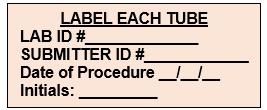
Label all sample containers before beginning the necropsy process. Label each tube with the animal ID numbers, the date of the necropsy, and name or ID of the person who collected the sample.
Sample storage
The storage of sample depends on the intended usage and timeframe to testing. Options for storage of samples:
- Primary diagnostic sample:
- Refrigeration at 4°C (up to 5 days)
- Frozen at -20°C (up to two weeks)
- Archived sample & Reference laboratory sample:
- Fresh-frozen: -80°C (indefinite storage)
- Trizol preserved: 4°C (up to 2 years (PCR only))
- Glycerol (50%) in PBS: 10 - 38°C (up to 3 months)
It is often necessary to transport samples from a necropsy location to the diagnostic laboratory. Correct packaging and clear labelling of packaging and samples reduces the risk of adverse events occurring during the transport process. Regardless of the distance, couriers should be aware of the contents of package, correct handling protocols, and what to do in the event of delayed delivery.
Contact details for the responsible person should be clearly labelled on the outside of the packaging and on paperwork within.
Sample transport
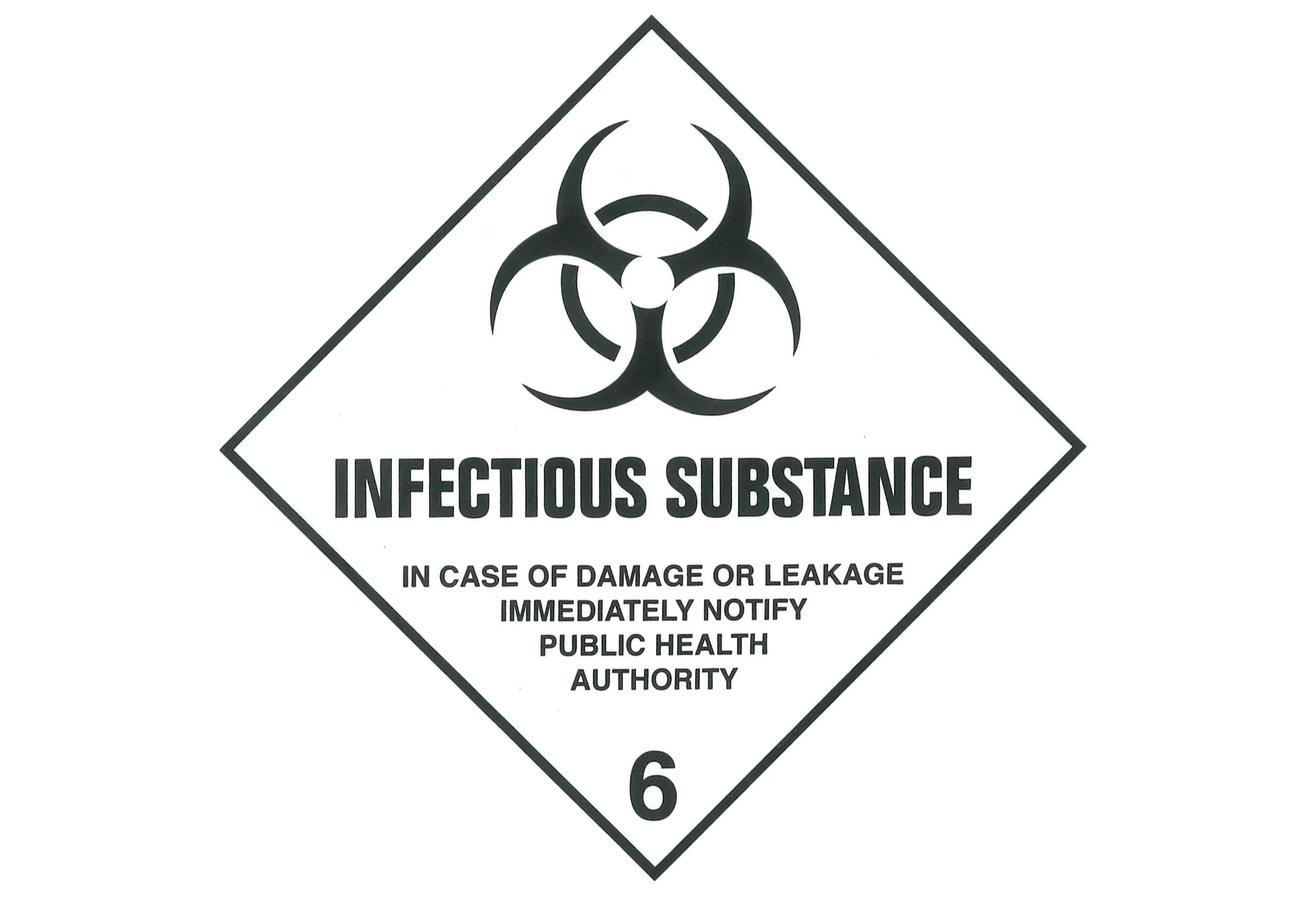
Brain and other nervous material from a suspected rabies case is classified as Category A infectious substance (under UN number UN2814) – this means that upon exposure it could cause permanent disability, or life-threatening or fatal disease in otherwise healthy humans or animals. When transporting the packaging should comply to IATA packaging instructions PI620.
Packing
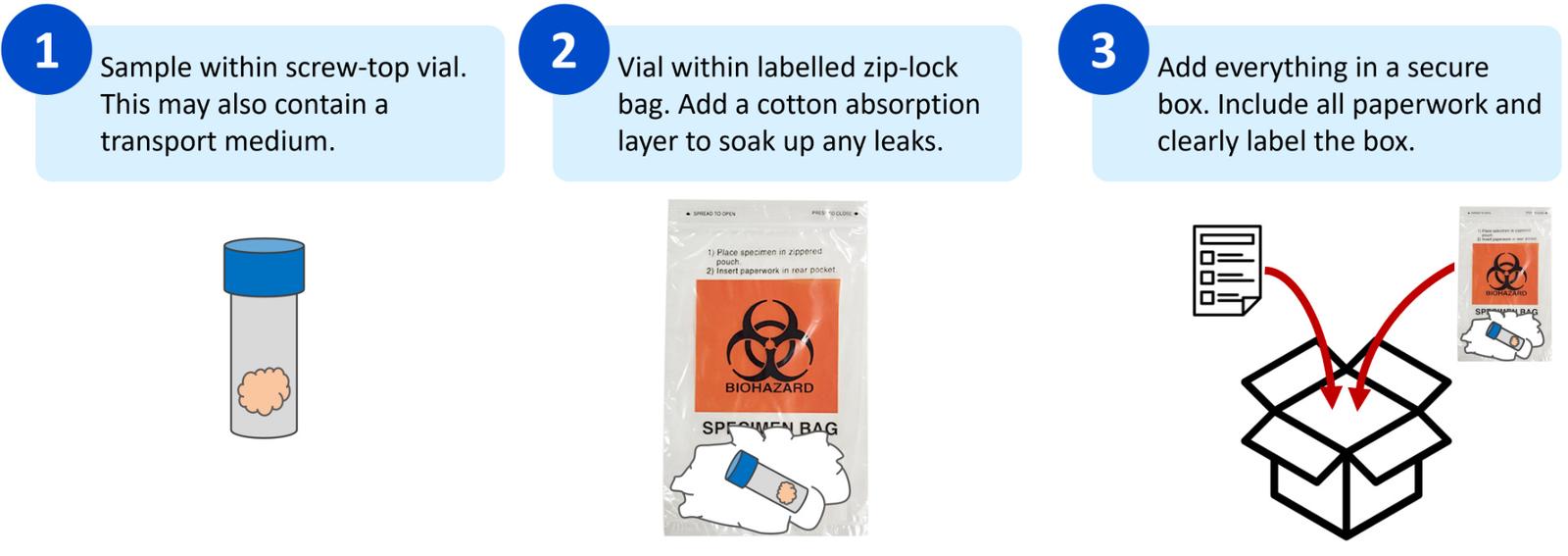
The brain sample should be placed in a container pot which either contains 50% glycerol, or with no transport medium if placed on ice for transport. The container should be labelled with the sample reference number.
The sample pot should then be placed within a sealed bag containing an absorbent substrate such as cotton wool to absorb any leakage from the sample pot. This sealed bag should be clearly labelled as biohazardous (Category A infectious substance).