

Intramuscular (IM) injection is a safe and effective method of delivery for many medications, however also has the potential to cause injury and complications if performed incorrectly. Repeated IM injection can cause pain to the horse and so try to use different muscles to during consecutive treatments.
Muscles groups which are commonly used for IM injections are:
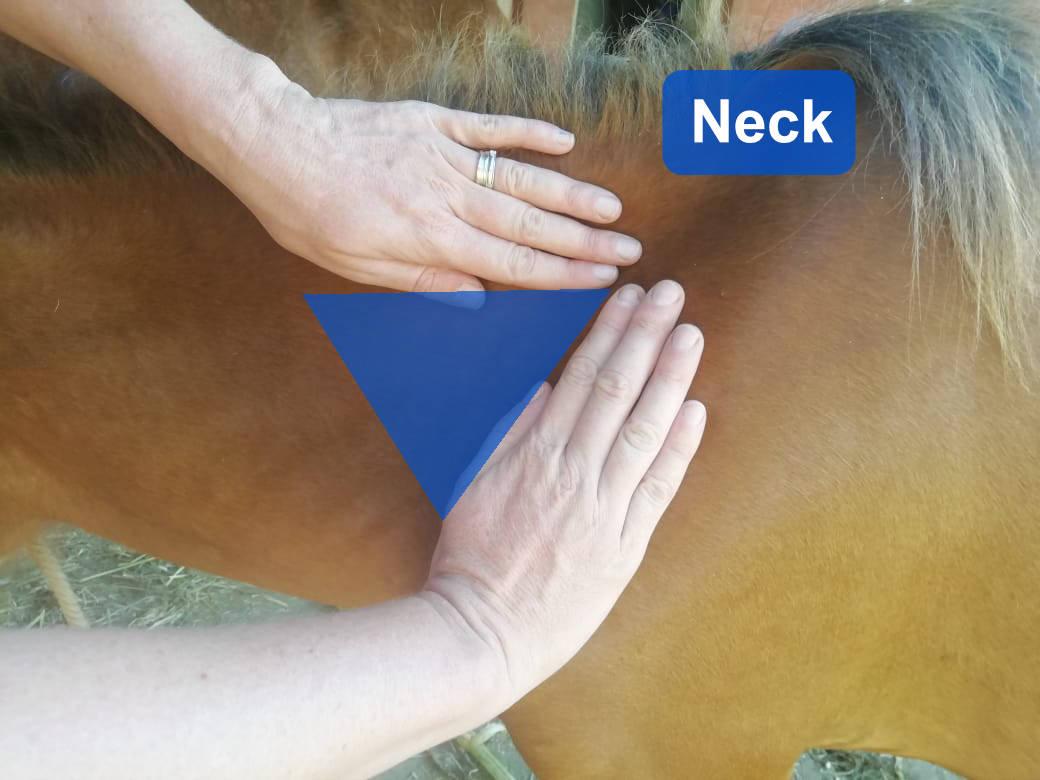
Neck. This location is the most common IM injection site and is the safest place for the operator. The correct location for injection into the neck muscles is in a triangular area, one hand's width from the scapula and one hand's width from the top of the neck (Figure 1). The method and location of injection is described in detail below.
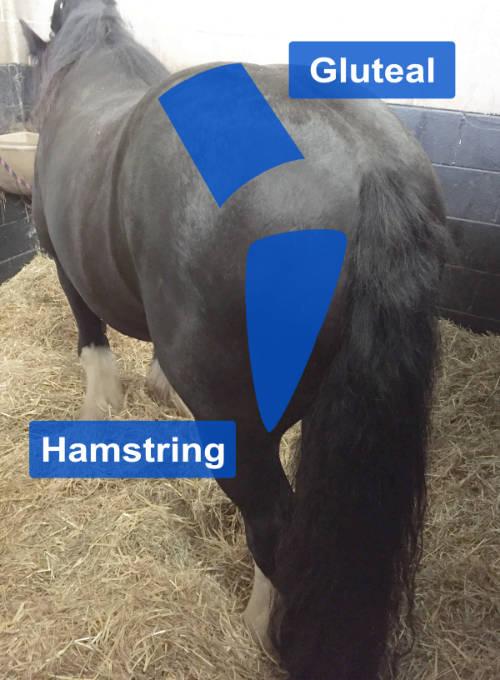
Gluteals. Remember to ask your handler to stand on the same side as you, and you stand close to the shoulder. Firmly tap the gluteals a few times before inserting the needle. Remember that the skin over the rump is much tougher than in other areas of the body, and you will need to have a firm grip of the needle as you push it through the skin (Figure 2).
Hamstrings. Beware of getting kicked when using this site, and stand close to the leg. Holding the tail towards you can help keep the horse's weight on the leg you are injecting, and prevent it from kicking you (Figure 2).
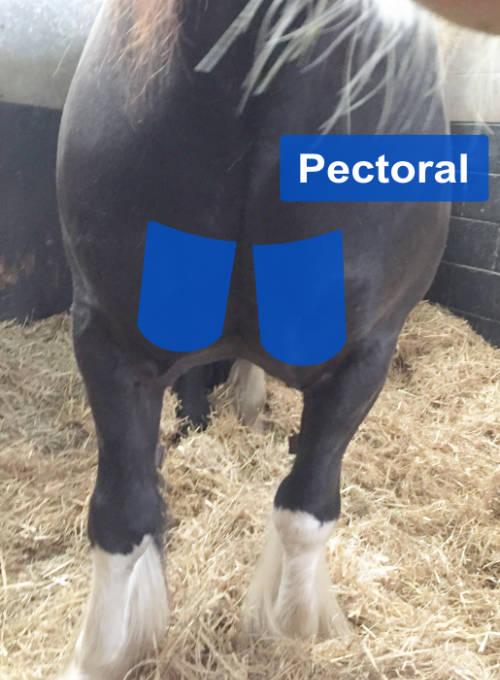
Pectorals. These are particularly useful if there is a risk of asbcessation, because of the dependant nature of the injection site which lends itself to draining - should an infection occur (Figure 2).
Method
Wiping the injection site with alcohol is not necessary if the horse's neck is relatively clean. For a very dirty horse, it is better to wash and scrub the area before injection and not just wipe the surface with alcohol.
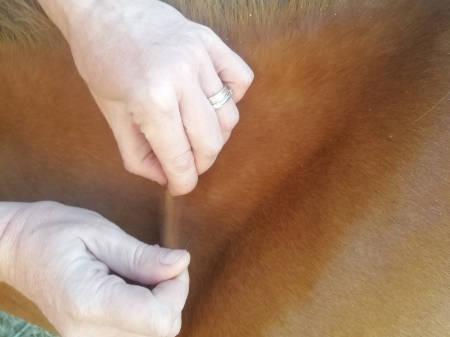
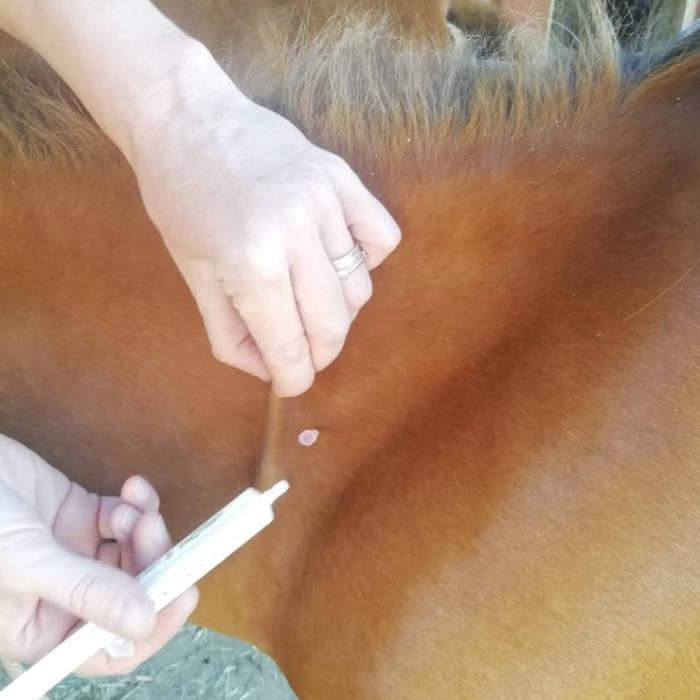
Pinch a fold of the skin with your non-dominant hand (Figure 3). Pinching the skin momentarily distracts the animal whist you insert the needle, thereby lessening the likelihood that he/she will react adversely.
Insert the needle. Using your dominant hand, insert the 18G needle directly deep into the muscle (Figure 4). There are two important reasons for inserting the needle separately to the syringe:
- This enables you to move back and away from the horse in the event that he/she reacts to the injection by kicking or rearing, thereby protecting yourself from injury.
- You can check to ensure that blood does not appear in the hub of the needle before you inject the medication. This is critically important; some drugs, such as procaine penicillin, must not be injected directly into the vascular system (artery or vein).
Alternatively, if the horse is calm and and is unlikely to react to the injection, the needle with the syringe attached can be inserted directly.
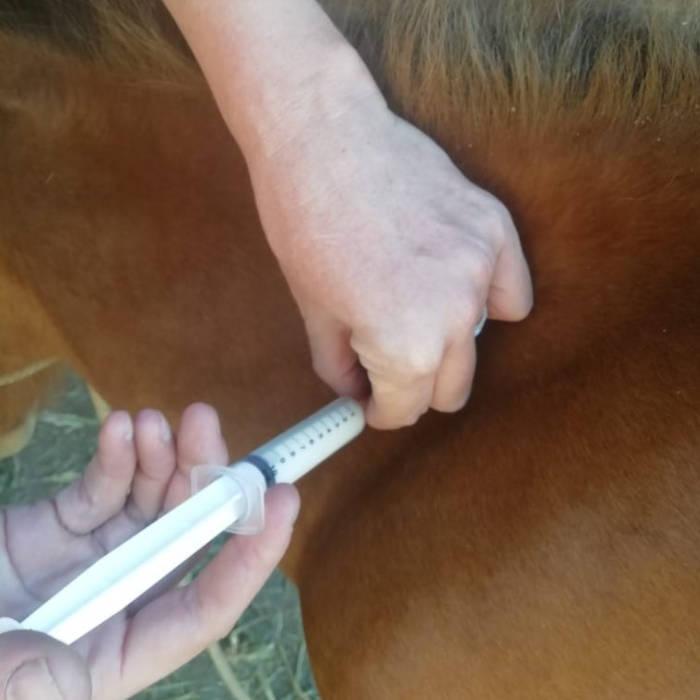
Aspirate by pulling back on the syringe to check that blood does not appear at the hub, indicating that your needle is in a blood vessel (Figure 5). If blood appears, withdraw the needle and reposition. You can then proceed to inject the medicine when you have confirmed that you have not entered a blood vessel.
It is often preferable for sedatives, such as alpha-2-agonists (xylazine or detomidine), and narcotic opioids, such as butorphanol, to be given IV for a more rapid onset of action. However, in cases where the horse is aggressive or challenging to handle, these sedatives can also be given via the IM route.
Since these drugs are safe to give IV, the requirement to aspirate is not critical and the injection process can proceed quickly before stepping away to safety. However, please note that to achieve the same effect by IM injection, your dosage needs to be higher than when giving sedatives via the IV route.